
We Knew...

I knew the system was broken and captured.
I tried to outsmart it anyway.
I wasn’t alone. A whole generation of us did — operatives, organizers, strategists, true believers across the spectrum. We saw it clearly and kept playing. Better messaging. Right tempo. Smarter framework. One more move inside a machine we already knew was rigged. We told each other the same story in the same rooms for thirty years: that the right candidate, the right message, the right moment could thread the needle.
We were wrong. But that’s not the hardest part to admit.
The hardest part is that we knew.
Six months ago I wrote about Proposition 50. Seventy-five days from threat to implementation. Quantum-tempo campaigning overwhelming deliberation. Democrats could win, I argued, by matching the speed of the opposition.
I was right on the tactical side.
I missed what was happening underneath.
While I was analyzing tempo — who moved faster, who spent more, whose surrogates generated more algorithmic amplification — a thirty-year project was completing itself in the courts. Not fast. Slow. Deliberate. Decision by decision, appointment by appointment, doctrine by doctrine, until this week when the Voting Rights Act was functionally eliminated and eight states began redrawing maps within hours of the ruling.
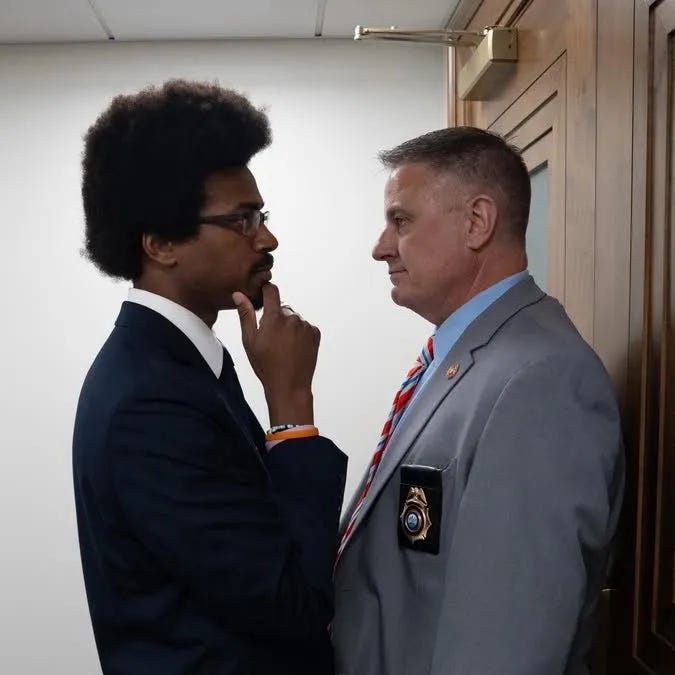
I watched an elected Tennessee State Representative get physically barred from the room where his district was being erased.
State legislatures in the South re-opened deep wounds that most of us thought had been repaired, or at least patched up.
I have no framework for that. Not because I lack the analytical tools. Because frameworks are for systems that still have floors. What I watched this week wasn’t a system misfiring. It was a system working exactly as designed by the people who spent thirty years designing it.
The article I wrote about the California redistricting sprint was about the weather. How to use the prevailing winds to your advantage and get to the destination faster. This week was geology.
And here is what the geology reveals: while we were running campaigns and messaging strategies and issuing “strongly worded statements” they were building something permanent. They were patient in a way we never were.
They didn’t try to outsmart the machine. They replaced it.
There is no needle left to thread.
This weekend, across the country, long-time operatives, strategists, and political and policy types are gathering in rooms trying to understand what just happened.
Convenings. Presentations. Frameworks for fighting back.
I don’t doubt the sincerity. I share the impulse.
But I keep thinking about what Camus called philosophical suicide — the leap away from an unbearable truth toward the comfort of a system that lets you keep functioning without fully confronting what you’re looking at. The alternative to staring directly at the geology is to keep analyzing the weather. To propose bank-shot legal strategies, as House Democrats did this weekend, that would require replacing an entire state Supreme Court in order to reinstate a map that voters approved and courts voided.
To schedule the next convening.
To build the next framework.
I understand it. I’ve done it myself. For thirty years.
But the convenings are not going to close the gap between the system we believed in and the one that actually exists. The frameworks assume a floor that this week confirmed is gone.
There is no needle left to thread.
I don’t have a solution. I’m not going to offer one. What I have is this: the admission that clarity about a broken system is not the same as being outside it. You can see the capture clearly and still be captured — by habit, by craft, by the professional identity built inside the machine you know is broken. By the community of people around you who are all telling each other the same story.
That’s where we were. That’s what this week ended.
We knew. We tried to outsmart it.
We were wrong to try.
Thank you Steve. As you note, 30 years of geological engineering while we tried to optimize for outcomes.