
What I Learned When I Looked More Closely
Family photographs, Vilkija, and the weight of images

Two weeks after my father died, I wrote about the bet he made on America—and a very different bet I made.
Just after I wrote the piece, a moving truck rolled up to our garage with his belongings. The usual stuff: furniture with a distinctly 1990s feel. Lots of gadgets and memorabilia from a life well lived, and a safe marked simply “Family Histories.”
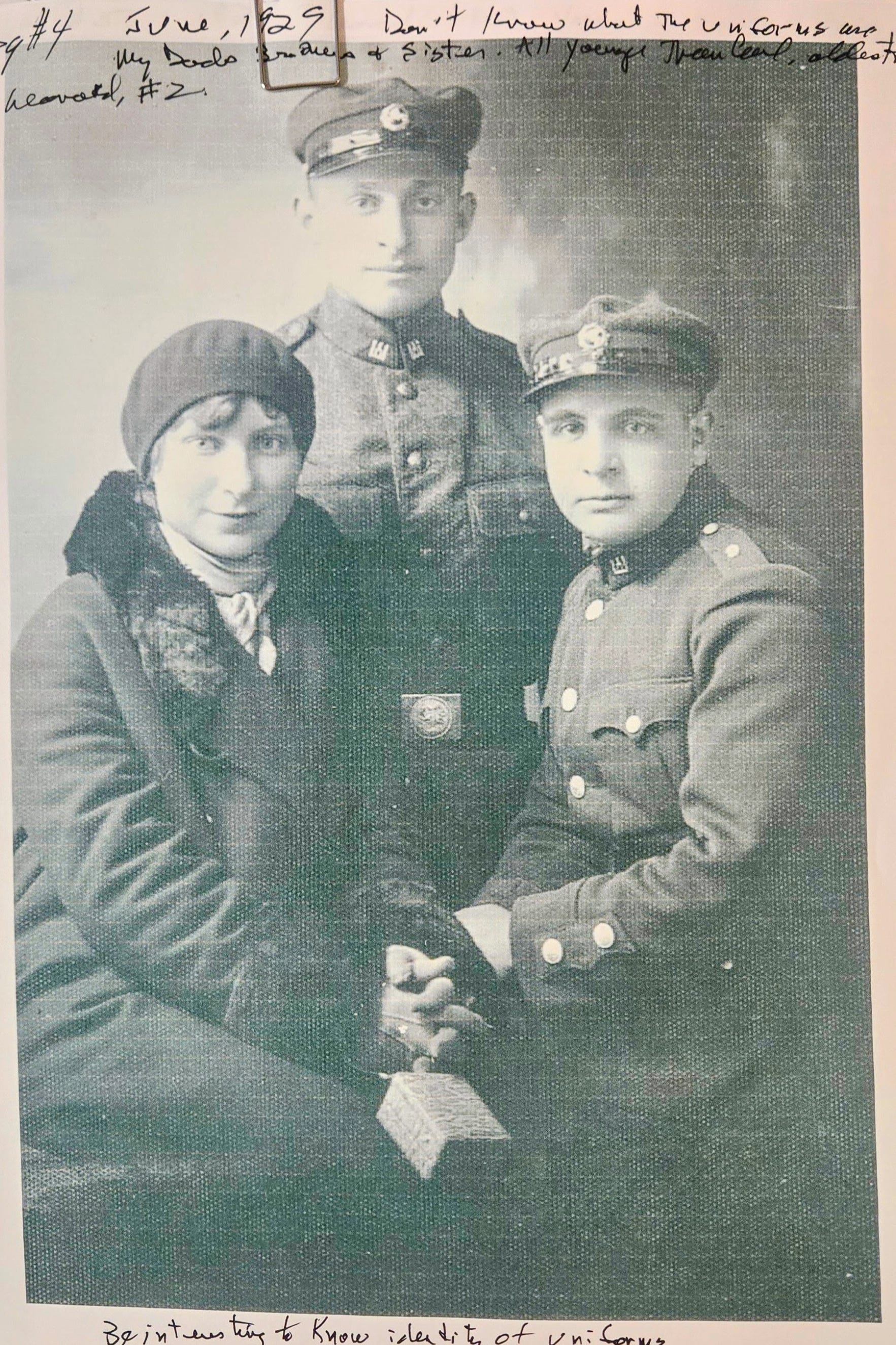
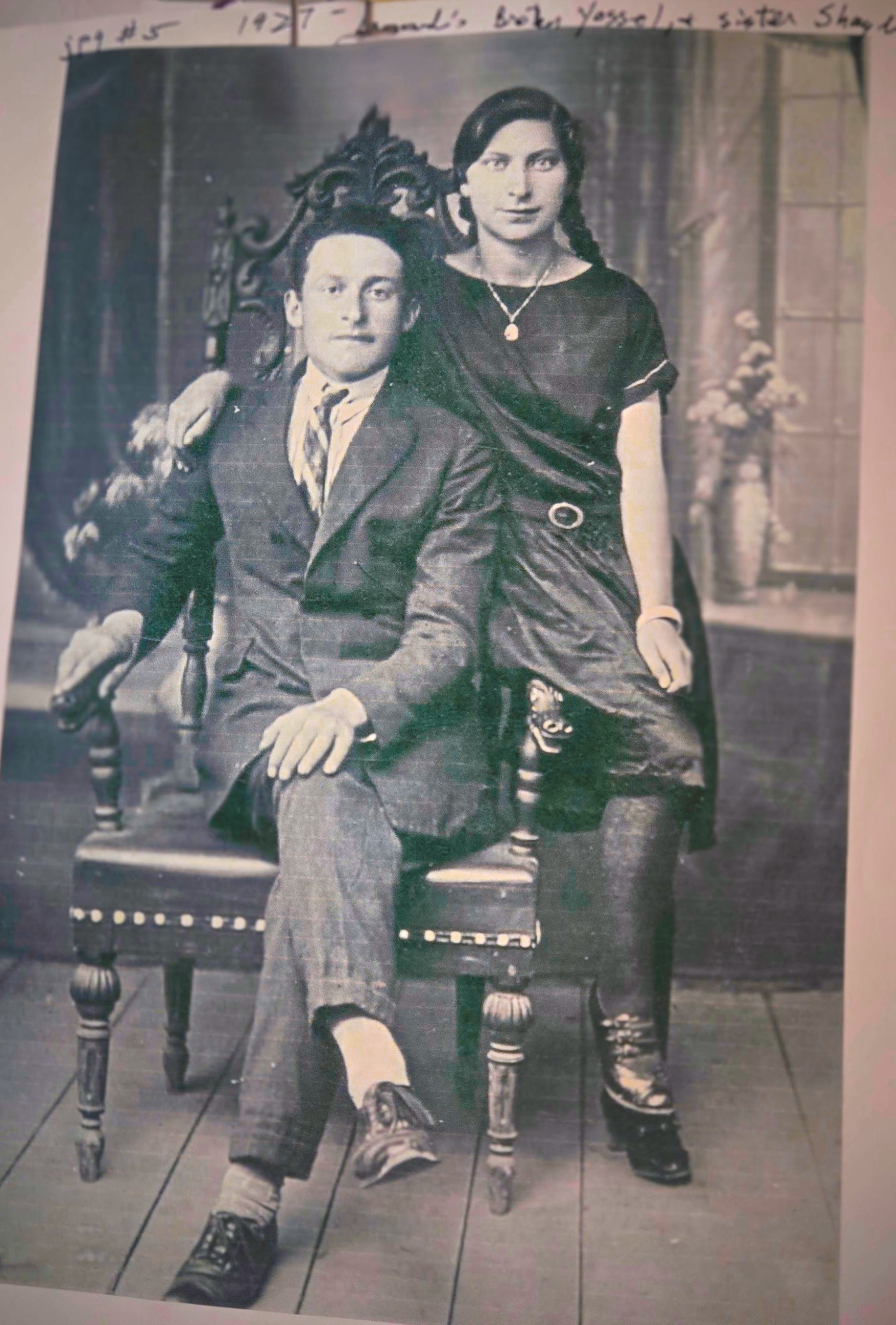
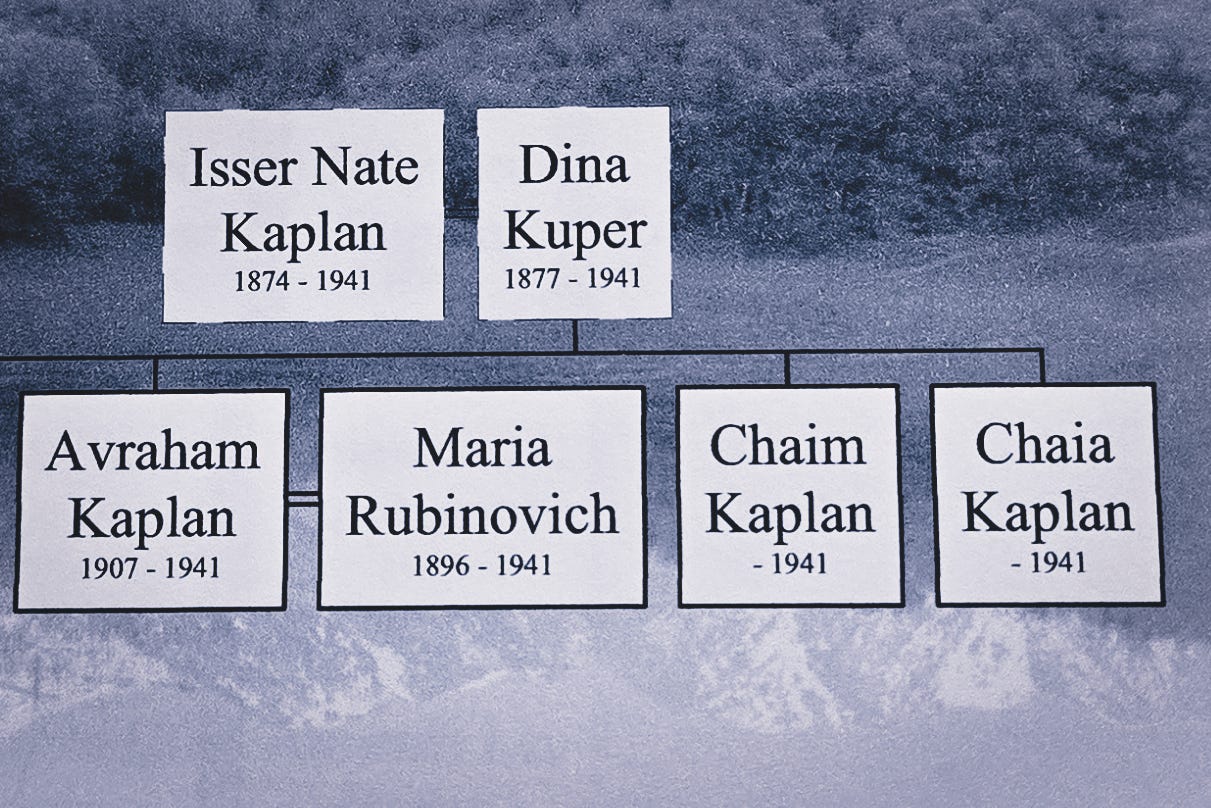
Inside were photographs. Young 1920s types captured in a portrait studio. Military uniforms from 1929. And a family tree that goes back to the 1700s in Lithuania.
I had never seen any of it.
I heard plenty of family stories, mostly about my dad’s childhood above his father’s small market in Des Moines, Iowa. Names of childhood pals — Italians, Jews, and Irish - that made us all laugh with their funny names.
It sounded like the “Little Rascals” smack in the middle of the bread belt.
We never heard where it all started.
The Paper Trail
My grandfather left Lithuania in 1920 with a passport identifying him as a citizen and a merchant. What he left behind—parents, brothers, sisters—remained in the town of Vilkija. Family trees and handwritten notes preserve their names and birthdates, but then stop abruptly in 1941. No death certificates follow. No emigration records. No survivor testimony. Entire branches of the family simply end.
I kept returning to one photograph: three people in military uniforms, likely Lithuanian Army, circa 1929. My dad (or another family member) had written notes trying to identify them—guesses, crossed out, revised.
Even the family historians who documented this couldn’t name them with certainty. None of the notes left by family historians say “killed” or “Holocaust victims.”
They were already becoming anonymous.
I saw phrases like stayed behind. At first, that felt evasive. Then I understood it for what it was: discipline.
No metaphors. No wistfulness. Just a clean stop.
The Arithmetic of Survival
My grandfather left because he could. His siblings stayed because they had businesses, families, lives. In 1920, that may have seemed like a reasonable calculation.
By 1941, it wasn’t.
On August 28, 1941, German Einsatzgruppen and Lithuanian auxiliary forces marched the Jewish residents of Vilkija into the Pakarklė Forest, two kilometers from town. Men, women, and children were shot and buried in mass graves.
This happened across Lithuania in a matter of weeks. No camps. No transport lists. No bureaucratic trail. Just absence where community had been.
The historical term for this is Holocaust by bullets. My grandfather's response was silence.
What Words Carry
The photographs began to feel different in my hands. These weren’t symbols of loss. They were evidence of life before erasure. People who had no way of knowing that history was about to close around them.
Working through this material has changed how I hear certain words used today—especially the word genocide. Not because suffering elsewhere isn’t real - it is - but because genocide is not a synonym for suffering, injustice, or moral outrage. It names something narrower, and more final: the systematic, intentional destruction of a people.
That happened to my family. Precisely. Completely. In 1941.
I didn’t set out to write this. I was doing what families do after loss. Going through stuff. Deciding what stays. I was trying to identify people in photographs.
What I found instead was a responsibility I hadn’t anticipated: not to weaponize memory, but not to let it be erased or trivialized either. Before we use words like genocide, it’s worth anchoring what they meant when used correctly.
It meant Vilkija, 1941. It meant names on a family tree that simply stop.
Language carries weight, and precision is not a luxury. It’s precisely what keeps memory from dissolving into rhetoric.
Great post, Steve.