
When the Theories Run Out

If you know me, or have followed my work, you know that I’m a relentless pragmatist. Trained in rough-and-tumble politics, worked in government, earned a master’s in government and public policy, and now teaching at a major university.
I’ve seen a lot.
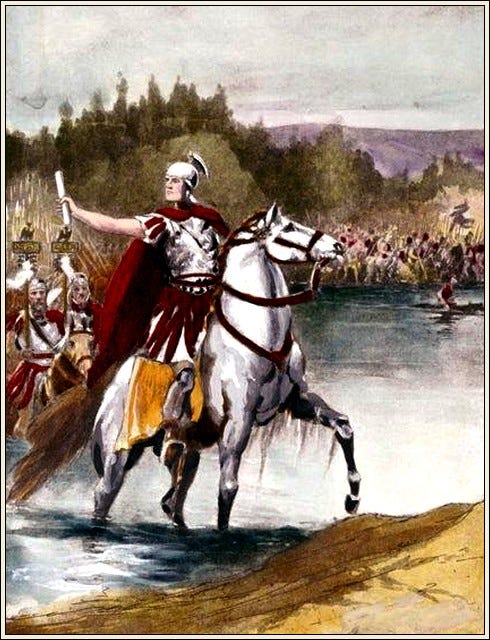
But my friends—we have crossed the Rubicon. The damage to our democracy is profound. The guardrails that kept our nation in balance for over 250 years aren’t just frayed; they’re severed.
I could write about political strategy, about what Democrats should do next. We could argue tactics—whether to go on bro-driven podcasts, push messages of “abundance,” or chase TikTok algorithms.
All of it feels like bullshit.
When the Theories Run Out
I’ve spent decades in politics and now teach communications and strategy to a new generation. I’ve read Camus on revolt and Han on digital capitalism. I understand their theories about community versus individual optimization, about finding meaning through shared struggle.
And I’m watching those frameworks collapse in real time.
Tyler Robinson shot Charlie Kirk after being immersed in toxic online culture. That’s the immediate story. The deeper one is that our information ecosystem rewards the most destructive interpretations of knowledge.
Robinson was a bright young man who decided murder was activism. Kirk was a provocateur who thrived on division and became its victim. Treating this as an isolated tragedy rather than the predictable outcome of a broken system shows how far gone we are.
The Inadequacy of Wisdom
For years, Camus offered a roadmap: recognize our shared condition, build community through struggle.
Han explains how neoliberal capitalism turns us into entrepreneurs of our own souls, optimizing ourselves into isolation. Both diagnoses still resonate.
But both feel insufficient.
Charlie Kirk’s killer didn’t lack frameworks or information. He had more access than any generation in history. The problem wasn’t ignorance—it was that algorithms and communities rewarded his worst impulses.
When the Machine Reveals Itself
And now the machine has stopped pretending.
Disney/ABC suspended Jimmy Kimmel Live! indefinitely after FCC Chair Brendan Carr warned that Kimmel’s comments about Kirk’s killing could endanger broadcast licenses. Nexstar, seeking approval for a multibillion-dollar merger, dropped the show immediately.
This isn’t “cancel culture.” This isn’t market forces. It’s government threats shaping what can and cannot be said on television.
Kimmel made a factual error suggesting Robinson was part of Trump’s base before his motives were clear. In a normal world, that merits a correction. In this world, it ended a 20-year career within hours.
The pretense of persuasion and algorithmic nudges is gone. Raw state power is being used to silence dissent—and corporations are capitulating.
The Real Problem
We’ve built a country that runs on conflict.
Media profits from outrage. Political parties raise money by demonizing opponents. Social media amplifies division because it drives clicks.
Charlie Kirk profited from this system. Tyler Robinson was radicalized by it. Both followed the incentives to their logical conclusion.
Neither broke the rules. They simply revealed the rules for what they are.
Where Hope Lives
Here’s what I know from two decades in politics: even the most entrenched systems have breaking points. Watching Disney/ABC capitulate in real time may be the moment when more Americans finally see the stakes.
The hope isn’t in community alone—it’s in enough people realizing we’ve crossed from dysfunction into something closer to authoritarian control.
When government officials can end careers with regulatory threats, when corporations fold to avoid retaliation, when free speech is chilled across workplaces and classrooms—that’s not politics. That’s censorship by state power.
Some leaders are sounding the alarm. The ACLU called this “beyond McCarthyism.” Governor Newsom called it “coordinated and dangerous.” Even some conservatives are uneasy.
But the test isn’t what politicians say—it’s whether ordinary citizens recognize that defending Jimmy Kimmel’s right to speak is defending their own.
What Now
No single prescription will fix this. But there are steps:
Call it what it is. Don’t minimize it as “culture war.” This is state retaliation against speech.
Defend principle, not personalities. You don’t have to like Jimmy Kimmel to see why his suspension matters.
Support institutions that fight back. Civil liberties groups, unions, independent media—they are imperfect but essential.
Teach critical resistance. For me, that means continuing to equip students to think critically about power, even when the tools feel outdated.
Some Brutal Honesty
The machine adapts faster than we do. Politicians will exploit each crisis to expand control. Platforms will adjust around the edges while keeping division profitable.
Maybe we are witnessing the slow dissolution of American democracy into tribal warfare conducted through digital platforms and occasional real-world violence.
But despair guarantees surrender.
Camus taught us to imagine Sisyphus happy—not because the struggle has meaning, but because refusing despair is itself resistance. Han showed us how self-optimization can blind us to collective action. Both remain true, if incomplete.
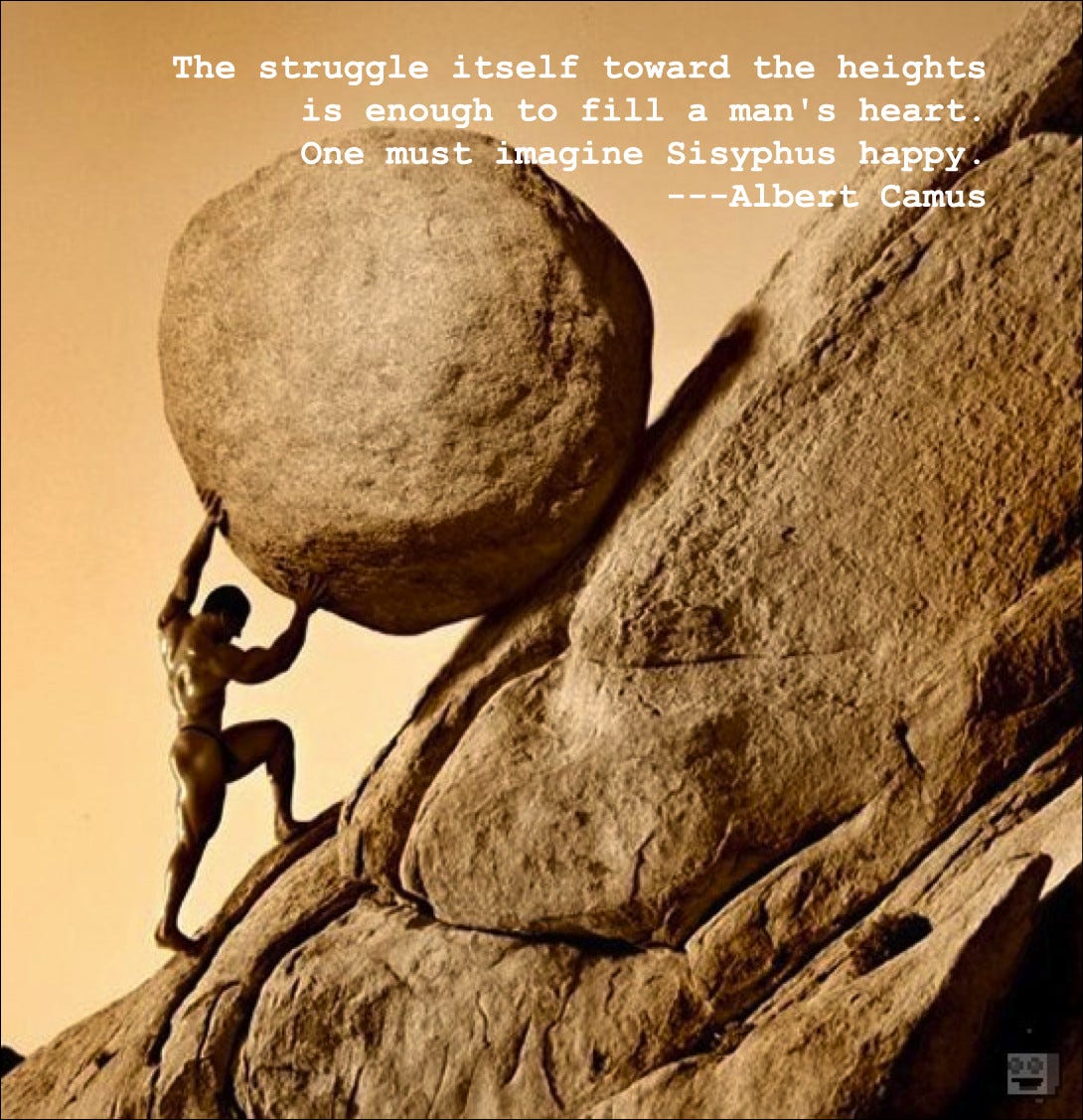
So I keep teaching, keep writing, keep refusing to surrender. Not because I believe it will fix everything, but because refusing is the only path left that doesn’t concede defeat.
Sometimes, when the theories run out, refusal is enough.